
| Download the amazing global Makindo app: ✅ Means NICE/National Guidelines 2026 compliant Android | Apple | |
|---|---|
| MEDICAL DISCLAIMER: Educational use only. Not for diagnosis or management. See below for full disclaimer. |
Vitamin D (1,25 OH2)
Related Subjects: |Ferritin |CEA |ESR |CRP |ALP |LDH |HbA1c |Alpha Fetoprotein |Anti-Hu ab |Biochemical Lab values
⚠️ Do NOT request 1,25-dihydroxyvitamin D (calcitriol) to assess vitamin D status. The correct test for deficiency, rickets, or osteomalacia is 25-hydroxyvitamin D. 💡 1,25-(OH)₂ D can be normal or even elevated in deficiency due to secondary hyperparathyroidism.
📖 About
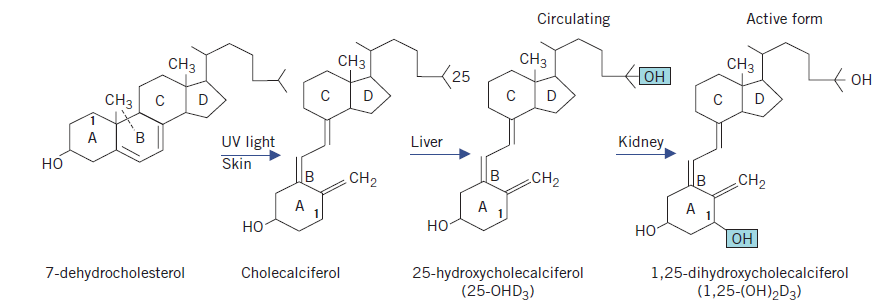
- 25-hydroxyvitamin D (25-OH D): Main circulating form, long half-life (~2–3 weeks), best indicator of overall vitamin D stores.
- 1,25-dihydroxyvitamin D (1,25-(OH)₂ D, calcitriol): Active form, short half-life (hours), tightly regulated by PTH, calcium, phosphate, and fibroblast growth factor 23 (FGF23).
- Levels of 1,25-(OH)₂ D do not reflect vitamin D reserves. They may be normal or raised in deficiency due to secondary hyperparathyroidism.
- Extra-renal production of 1,25-(OH)₂ D can occur in sarcoidosis, TB, lymphoma, and granulomatous diseases → can cause hypercalcaemia.
🎯 Clinical Use of Each Test
- 25-OH Vitamin D: Test of choice for suspected deficiency, osteomalacia, rickets, falls, osteoporosis, malabsorption, chronic illness.
- 1,25-(OH)₂ Vitamin D:
- Investigation of unexplained hypercalcaemia (esp. granulomatous disease or lymphoma).
- Evaluation of rare inherited disorders (e.g. 1-α hydroxylase deficiency, vitamin D–resistant rickets).
- Assessment in advanced chronic kidney disease (where 1-α hydroxylation is impaired).
🧾 Sample Requirements
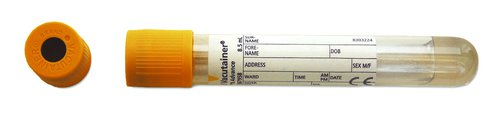
- 5 mL venous blood in gold-top serum separator tube (or rust-top in the Acute Unit).
🌟 Summary
25-OH Vitamin D = correct test for deficiency, osteomalacia, rickets. 1,25-(OH)₂ Vitamin D = only useful in specific scenarios (renal failure, granulomatous disease, rare inherited rickets). 💡 Ordering the wrong test is a common source of wasted investigations and diagnostic delay.
| The content on this website is provided for educational and informational purposes only to support exam preparation (e.g., MLA, MRCP, USMLE) and learning. This is NOT medical advice, diagnosis, treatment, or professional guidance. It does not replace consultation with a qualified healthcare professional, official guidelines (e.g., NICE, GMC, BNF), or supervised clinical practice. Always verify information with current, authoritative sources. Makindo and its contributors accept no liability for any reliance on this content, including errors, omissions, or any resulting harm, loss, or consequences. By using this site, you agree to these terms. |
|
|
Categories
- About
- Acute Medicine
- Anaesthetics and Critical Care
- Anatomy
- Anatomy and Physiology
- Biochemistry
- Book
- Cardiology
- Collections
- CompSci
- Crib Sheets
- Critical care
- Dental
- Dermatology
- Differentials
- Drugs
- ENT
- Electrocardiogram
- Embryology
- Emergency Medicine
- Endocrinology
- Ethics
- Foundation Doctors
- GCSE
- Gastroenterology
- General Practice
- Genetics
- Geriatric Medicine
- Geriatrics
- Guidelines
- Haematology
- Hepatology
- Immunology
- Infectious Diseases
- Infographic
- Investigations
- Lists
- MRCP
- Mandatory Training
- Medical Students
- Microbiology
- Nephrology
- Neurology
- Neurosurgery
- Nutrition
- OSCE
- Obstetrics Gynaecology
- Oncology
- Ophthalmology
- Oral Medicine and Dentistry
- Orthopaedics
- Paediatrics
- Palliative
- Palliative Care
- Pathology
- Pharmacology
- Physiology
- Procedures
- Psychiatry
- Public Health
- Radiology
- Respiratory
- Resuscitation
- Revision Topics
- Rheumatology
- Statistics and Research
- Stroke
- Surgery
- Toxicology
- Trauma and Orthopaedics
- USMLE
- Urology
- Vascular Surgery