Related Subjects:
|Ulcerative Colitis
|Microscopic colitis
|Irritable bowel syndrome
|Lower Gastrointestinal (Rectal) Bleeding
|Achalasia
|Oesophageal Carcinoma
|Diffuse Oesophageal spasm
|Diffuse Oesophageal Perforation - Rupture
|Gastro-Oesophageal Reflux
|Barrett's oesophagus
|Zollinger Ellison syndrome
|Gastrinoma
|VIPomas
|Carcinoid Tumour Syndrome
|Familial Adenomatous polyposis (FAP)
|Colorectal cancer
|Colorectal polyps
|Ulcerative Colitis
|Acute Severe Colitis
|Crohn's disease
|Coeliac disease
|Dermatitis Herpetiformis
👄 Peutz-Jeghers syndrome (PJS) = rare autosomal dominant disorder
👉 Pigmented mucocutaneous macules + multiple hamartomatous GI polyps.
⚠️ Lifetime cancer risk up to 90% by age 60.
📖 About
- 🧬 Autosomal dominant inheritance due to STK11/LKB1 mutation (chromosome 19p13.3).
- 🌱 Hamartomatous polyps throughout GI tract (especially small bowel), with risk of obstruction & bleeding.
- ⚡ High cancer risk: GI (colorectal, gastric, pancreas, small bowel) + extra-GI (breast, ovarian, cervical, testicular, lung).
🔎 Aetiology
- Germline mutation in STK11/LKB1 → tumour suppressor dysfunction → uncontrolled growth.
- Polyps show characteristic smooth muscle arborisation histologically.
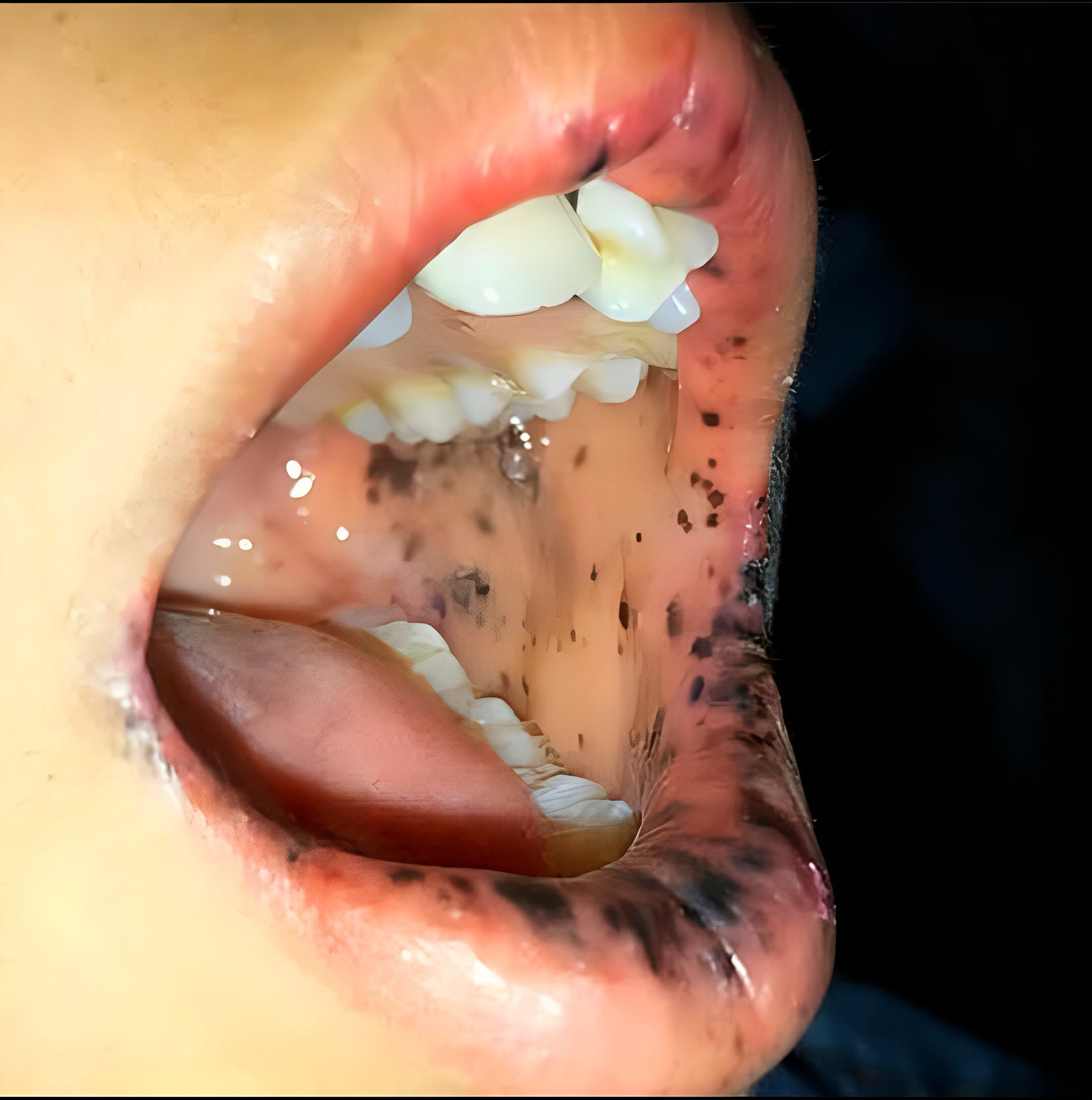
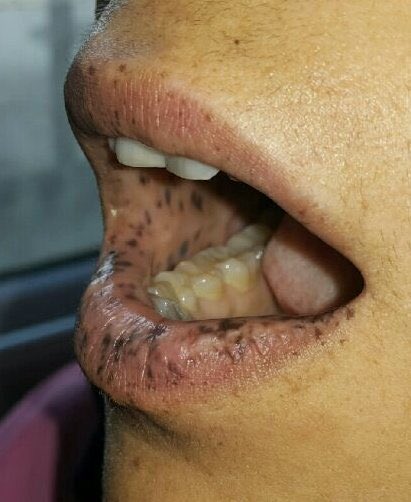
🩺 Clinical Features
- 👄 Pigmentation: Brown-black macules on lips, oral mucosa, hands, feet (often childhood onset, may fade with age).
- 🌱 Polyps: Mainly small bowel > colon > stomach. Can cause obstruction, intussusception, bleeding.
- ⚠️ Complications: Rectal bleeding, anaemia, acute intussusception (esp. children/young adults).
- 🧬 Malignancy risk: GI and extra-GI cancers.
📊 Malignancy Risks in PJS
| Organ | Associated Cancer |
|---|
| GI tract | Colorectal, gastric, small bowel, pancreatic |
| Reproductive (♀) | Ovarian (esp. sex cord tumours), cervical, endometrial |
| Reproductive (♂) | Testicular Sertoli cell tumours |
| Other | Breast, lung |
🧪 Investigations
- 🩸 FBC – anaemia (from chronic bleeding).
- 🖥️ Small bowel imaging: MRE or capsule endoscopy for polyp detection.
- 🔬 Histology – hamartomatous polyp with smooth muscle “arborisation”.
- 🧬 Genetic testing – confirm STK11 mutation; screen family members.
⚕️ Management
- 🔄 Surveillance: Lifelong GI endoscopic monitoring + screening for breast, gynaecological, and pancreatic cancers.
- 🔧 Polypectomy: Endoscopic removal of symptomatic or large polyps.
- ✂️ Surgery: For intussusception, obstruction, or inaccessible lesions.
- 🧑⚕️ Genetic counselling: For affected families.
- 👩⚕️ Multidisciplinary follow-up: Gastroenterology, oncology, gynaecology, genetics.
⚠️ Complications
- 🚨 Intestinal obstruction (esp. intussusception in younger patients).
- 💉 GI bleeding → iron-deficiency anaemia.
- 🎗️ Malignancy: lifetime risk of colorectal, gastric, pancreatic, breast & gynae cancers (up to 90% by 60).
🌟 Summary:
Peutz-Jeghers = 👄 pigmentation + 🌱 GI hamartomatous polyps + 🧬 STK11 mutation.
Think: obstruction, intussusception, bleeding, and ↑ lifetime cancer risk.
Surveillance & genetic counselling are essential.
