
| Download the amazing global Makindo app: ✅ Means NICE/National Guidelines 2026 compliant Android | Apple | |
|---|---|
| MEDICAL DISCLAIMER: Educational use only. Not for diagnosis or management. See below for full disclaimer. |
Anterior Choroidal Artery Ischaemic Stroke
Related Subjects: |Acute Stroke Assessment (ROSIER&NIHSS) |Atrial Fibrillation |Atrial Myxoma |Anterior Choroidal Artery Ischaemic Stroke |Causes of Stroke |Ischaemic Stroke |Cancer and Stroke |Hypertension |Small Vessel Disease |CADASIL |CARASIL
🧠 Anterior choroidal artery (AChA) stroke is a rare but clinically important lacunar syndrome. It accounts for ~0.6–2.5% of all ischaemic strokes and ~8–10% of small-vessel (lacunar) infarcts in large registries. Classic presentation: contralateral hemiplegia + hemisensory loss + homonymous hemianopia (complete triad in only ~10–25% of cases). Most cases present as incomplete syndromes (pure motor or sensorimotor). Early recognition on MRI helps confirm diagnosis and guide secondary prevention.
🧬 Vascular Anatomy & Territory
- Origin: arises from supraclinoid internal carotid artery (ICA), usually just distal to posterior communicating artery (PCoA).
- Course: cisternal segment → choroidal fissure → intraventricular segment.
- Supplied structures (variable but classic):
- Posterior limb of internal capsule (corticospinal & corticobulbar tracts)
- Ventral posterolateral (VPL) thalamus (sensory relay)
- Lateral geniculate body (visual pathway)
- Globus pallidus (pars externa)
- Optic tract & part of cerebral peduncle
- Choroid plexus, hippocampus tail, uncus (variable)
- Collateral flow: limited; distal AChA branches have poor anastomoses → vulnerable to isolated occlusion.
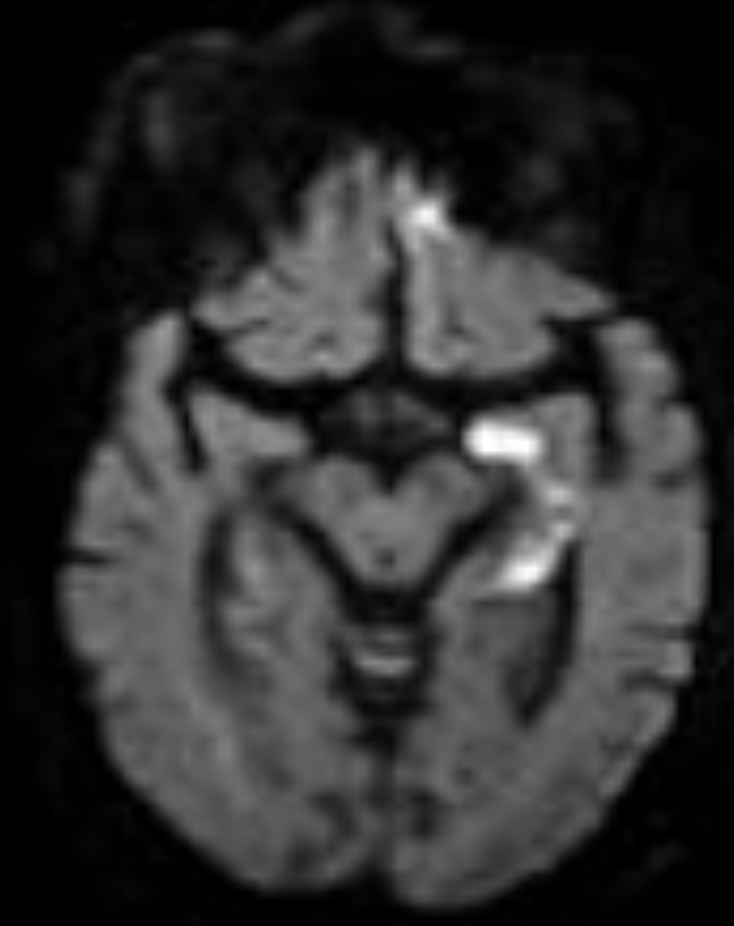
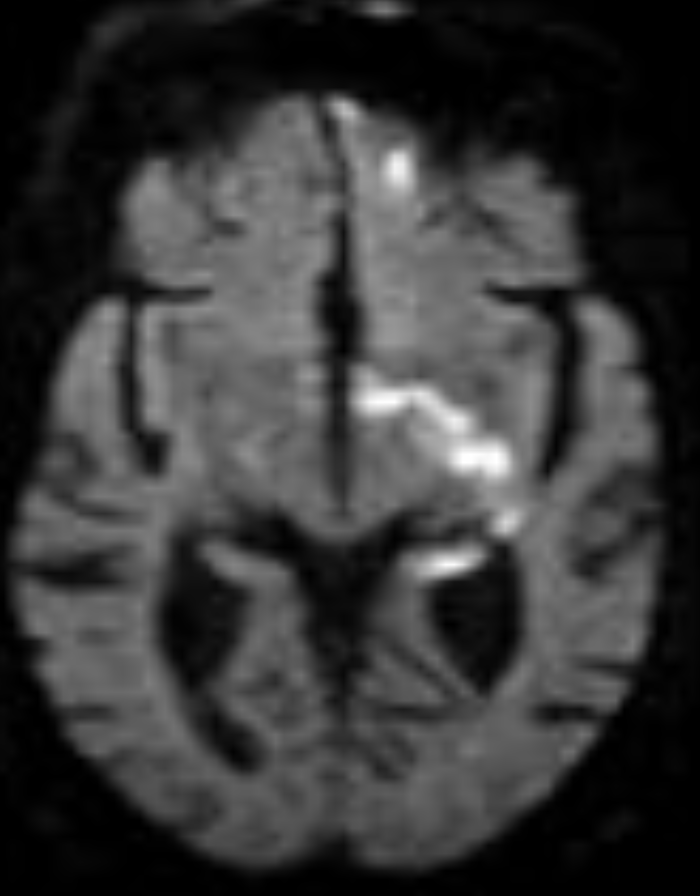
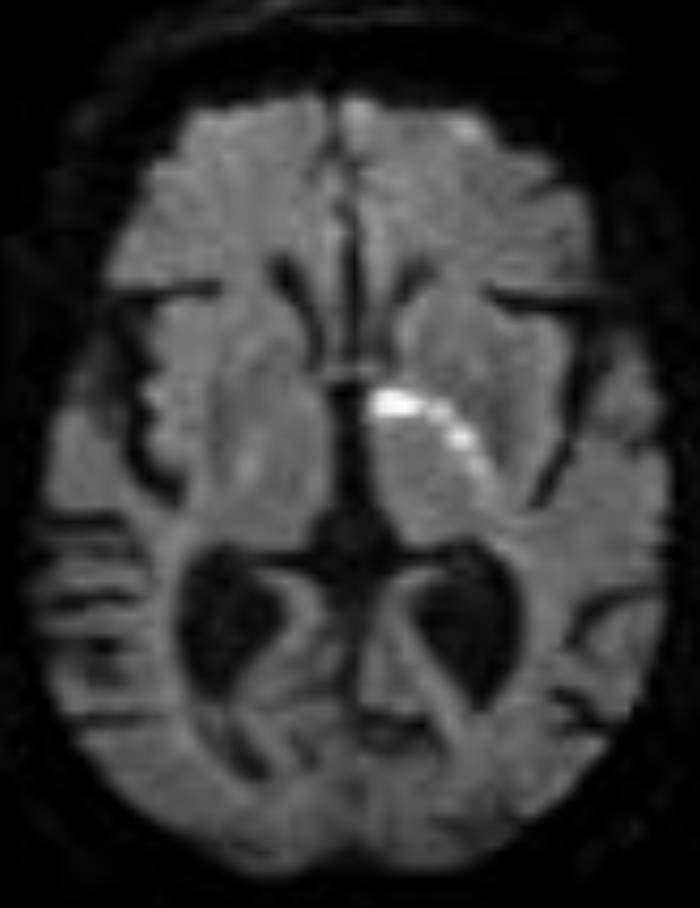
📊 Classic vs Real-World Clinical Presentation
| Feature | Classic Triad (textbook) | Real-world frequency | Notes |
|---|---|---|---|
| Contralateral hemiplegia / paresis | Present | ~75–90% | Most common & persistent sign (posterior limb internal capsule) |
| Contralateral hemisensory loss | Present | ~40–60% | Often transient or incomplete (VPL thalamus) |
| Contralateral homonymous hemianopia / quadrantanopia | Present | ~10–30% | Frequently mild/incongruous or missed (lateral geniculate body) |
| Pure motor hemiparesis | - | ~30–50% | Most common lacunar presentation |
| Sensorimotor stroke | - | ~20–30% | Common incomplete form |
| Ataxia, dysarthria, hemineglect | Variable | ~10–20% | Thalamic/peduncular involvement |
🩺 Clinical Features – High-Yield Summary
- Onset: Usually acute (minutes to hours); can be stuttering or progressive in some cases.
- Most frequent syndromes:
- Pure motor hemiparesis (capsular involvement).
- Sensorimotor stroke (capsule + thalamus).
- Ataxic hemiparesis (peduncle/thalamus).
- Less common: dysarthria-clumsy hand, hemineglect, aphasia (if dominant), visual field defects (often incomplete), seizures (rare at onset).
- Red flags for poor prognosis: altered consciousness, complete triad, large infarct volume, cardioembolic source.
🔍 Investigations – Stepwise Approach
- Urgent brain imaging:
- Non-contrast CT: often normal early; subtle hypodensity in posterior capsule/thalamus after 12–24 h.
- MRI brain (gold standard): DWI restriction in posterior limb internal capsule ± thalamus ± lateral geniculate ± cerebral peduncle; T2/FLAIR hyperintensity evolves later.
- Vascular imaging: CTA/MRA neck & intracranial - assess ICA stenosis, dissection, or embolus source.
- Cardiac workup: ECG, 24–72 h Holter, transthoracic ± transoesophageal echo.
- Bloods: FBC, U&Es, glucose/HbA1c, lipids, ESR/CRP, thrombophilia screen (young patients), homocysteine, B12/folate.
- Other if indicated: 24 h ABPM (hypertension), carotid duplex, prolonged rhythm monitoring.
💊 Management & Secondary Prevention
- Acute phase:
- Standard stroke protocol: thrombolysis if within window and no contraindications (rarely given in pure small-vessel disease).
- Mechanical thrombectomy not indicated (distal territory).
- Antiplatelet therapy: aspirin 300 mg stat → 75 mg daily (or clopidogrel if aspirin intolerant).
- Supportive care: swallow assessment, DVT prophylaxis, early mobilisation/rehabilitation.
- Secondary prevention (NICE / ESO 2025–2026):
- Antiplatelet: aspirin monotherapy (or clopidogrel) long-term.
- Intensive risk factor control:
- BP target <130/80 mmHg (or <125/75 if diabetic/proteinuria).
- Statin: high-intensity (atorvastatin 40–80 mg or rosuvastatin 20–40 mg); target LDL <1.8 mmol/L.
- Glycaemic control (HbA1c <48 mmol/mol if diabetic).
- Smoking cessation, alcohol moderation, diet/exercise.
- Anticoagulation only if cardioembolic source (AF, valve disease).
- Rehabilitation: physiotherapy, occupational therapy, speech therapy if dysarthria/aphasia.
📊 Prognosis & Outcome Data
| Feature | Data | Notes |
|---|---|---|
| Good functional outcome (mRS 0–2 at 3 months) | 60–80% | Higher in small lacunar infarcts |
| Mortality at 3 months | 5–15% | Higher in complete triad or large infarct |
| Recurrent stroke risk (1 year) | 5–10% | Similar to other lacunar strokes if risk factors controlled |
| Persistent disability | ~20–30% | Most commonly hemiparesis or sensory deficit |
🚩 Red Flags & Do-Not-Miss OSCE Points
- Young patient (<50) + no obvious risk factors → consider dissection, cardioembolism, thrombophilia.
- Complete triad + altered consciousness → large AChA infarct → poorer prognosis.
- Recurrent lacunar events → consider CADASIL or other small-vessel disease.
- Isolated hemianopia without motor/sensory deficit → consider differential (posterior cerebral artery territory).
📌 Key Exam & Viva Pearls
- Most common presentation: pure motor or sensorimotor lacunar stroke - not the full triad.
- MRI hallmark: DWI restriction in posterior limb internal capsule ± thalamus ± lateral geniculate body.
- Always ask about vascular risk factors (hypertension, diabetes, smoking) and cardioembolic sources.
- Secondary prevention = antiplatelet + intensive BP/lipid control (same as other lacunar strokes).
- Differentiate from posterior cerebral artery infarct (more visual field loss, less motor involvement).
📚 References (Feb 2026)
- Radiopaedia: Anterior choroidal artery infarct (updated 2025).
- UpToDate: Anterior choroidal artery territory infarction (2026).
- Arboix A et al. Acute anterior choroidal artery territory infarction. J Neurol Sci 2023–2025 series.
- NICE / ESO Stroke Guidelines (2025–2026): Lacunar & small vessel disease.
| The content on this website is provided for educational and informational purposes only to support exam preparation (e.g., MLA, MRCP, USMLE) and learning. This is NOT medical advice, diagnosis, treatment, or professional guidance. It does not replace consultation with a qualified healthcare professional, official guidelines (e.g., NICE, GMC, BNF), or supervised clinical practice. Always verify information with current, authoritative sources. Makindo and its contributors accept no liability for any reliance on this content, including errors, omissions, or any resulting harm, loss, or consequences. By using this site, you agree to these terms. |
|
|
Categories
- About
- Acute Medicine
- Anaesthetics and Critical Care
- Anatomy
- Anatomy and Physiology
- Biochemistry
- Book
- Cardiology
- Collections
- CompSci
- Crib Sheets
- Critical care
- Dental
- Dermatology
- Differentials
- Drugs
- ENT
- Electrocardiogram
- Embryology
- Emergency Medicine
- Endocrinology
- Ethics
- Foundation Doctors
- GCSE
- Gastroenterology
- General Practice
- Genetics
- Geriatric Medicine
- Geriatrics
- Guidelines
- Haematology
- Hepatology
- Immunology
- Infectious Diseases
- Infographic
- Investigations
- Lists
- MRCP
- Mandatory Training
- Medical Students
- Microbiology
- Nephrology
- Neurology
- Neurosurgery
- Nutrition
- OSCE
- Obstetrics Gynaecology
- Oncology
- Ophthalmology
- Oral Medicine and Dentistry
- Orthopaedics
- Paediatrics
- Palliative
- Palliative Care
- Pathology
- Pharmacology
- Physiology
- Procedures
- Psychiatry
- Public Health
- Radiology
- Respiratory
- Resuscitation
- Revision Topics
- Rheumatology
- Statistics and Research
- Stroke
- Surgery
- Toxicology
- Trauma and Orthopaedics
- USMLE
- Urology
- Vascular Surgery