OSCE Male Genital exam
Related Subjects:
|Breast Anatomy and Examination (OSCE)
|Shoulder examination(OSCE)
|Testicular examination(OSCE)
|Hernia Examination (OSCE)
|Rectal examination (OSCE)
|Liver Examination (OSCE)
|Cerebellar Examination (OSCE)
|Upper and Lower Limb Neurology (OSCE)
|Gastroenterology Examination (OSCE)
|Respiratory Examination (OSCE)
|Cardiology Examination (OSCE)
|OSCE Eye Exam
|OSCE Ear Exam
|OSCE Abdominal Exam
|OSCE Ascites Exam
|OSCE Jaundice Exam
|OSCE Testicular Exam
|OSCE Inguinal Exam
|OSCE Upper limb Neurology
|OSCE Lower limb Neurology
|OSCE Face Neurology
|OSCE Visual Fields
🧾 Introduction
- 🧼 Wash hands.
- 👥 Offer and request a chaperone.
- ✅ Gain informed consent, explain: “I will need to examine your genitalia, this will involve inspection and palpation. You may feel some discomfort but it should not be painful.”
- 📍 Position: Patient supine, lower abdomen and genitalia exposed, draped for dignity.
👀 Inspection
- General: build, secondary sexual characteristics, gynaecomastia.
- Hair distribution (face, axilla, pubis).
- Skin: scars, colour, rashes, lumps, ulcers.
- Penis:
- Base to shaft.
- Prepuce – ask permission before retraction; check for phimosis, paraphimosis.
- Meatus – position (hypospadias, epispadias), discharge.
- Scrotum: front & back, size, symmetry, height of testes (left usually lower).
- 👉 Always return foreskin to normal position afterwards.
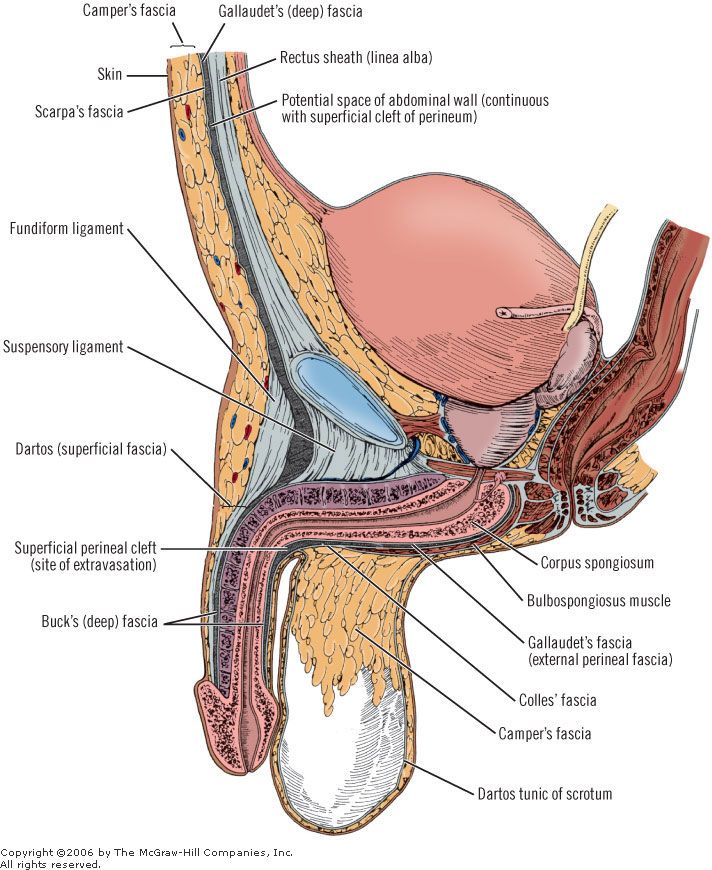
✋ Palpation
- Testes: number, size, consistency, tenderness, surface. (Checklist: P = Position, M = Masses, P = Pain, F = Feel/consistency)
- Epididymis: location, swellings.
- Spermatic cord: thickness, tenderness, vas deferens.
- Technique: roll testes gently between thumb and fingers, cover entire surface.
- If swelling present:
- Size, shape, tenderness, fluctuance.
- Transillumination 🔦 for hydrocele.
- Cough impulse for hernia.
- Can you “get above” the swelling? → helps localise (testis vs inguinal canal).
🧭 Complete Examination
- Palpate inguinal lymph nodes.
- Ask patient to stand → check for varicocele (“bag of worms”) and hernias.
- Abdominal exam – organomegaly (esp. liver).
- Check hernial orifices.
- Rectal exam (esp. prostate in older men).
- If a testicular lump → offer to examine lungs, liver & spine for metastases (bony tenderness).
🙏 Closure
- Thank patient and offer help with dressing.
- Wash hands again 🧼.
- Present findings clearly:
- Inspection: scars, skin changes, symmetry.
- Palpation: size, tenderness, lump features.
- Special tests: transillumination, cough impulse, get-above test.
- Suggest differentials (e.g. hydrocele, varicocele, epididymal cyst, testicular tumour, hernia).
- Suggest further tests (USS scrotum, tumour markers – AFP, β-hCG, LDH, urinalysis).
🌟 Examiner Pearls
- Always offer a chaperone – automatic fail if omitted.
- Never forget to return foreskin after retraction.
- Comment on secondary sexual characteristics – missed by many candidates.
- Be systematic with lumps: site, size, shape, surface, consistency, tenderness, transillumination, get-above test.
- Finish with: “I would complete the examination by assessing regional lymph nodes, abdomen, and doing relevant systemic exams.”
