⚡ Acute Dystonia = sudden, involuntary muscle contractions (often face, neck, jaw, or eyes) caused mainly by dopamine-blocking drugs.
✅ Responds rapidly to anticholinergics: Procyclidine 5–10 mg IM/IV/PO or Benztropine 1–2 mg IV.
ℹ️ About
- ⏳ Reactions can occur within hours–days of exposure to culprit drugs.
- 🔮 Best predictor = past history of dystonic reaction.
- 💊 Can occur even after a single, low dose of offending medication.
🧬 Aetiology
- Most due to drugs with central dopamine-blocking effects.
- Frequently seen with antipsychotics (neuroleptics) and antiemetics like metoclopramide.
💊 Causes (Drugs)
- Antipsychotics: Haloperidol, Risperidone, Fluphenazine, Clozapine, Olanzapine.
- Antiemetics: Metoclopramide, Prochlorperazine.
- Other associations: Cocaine, SSRIs, Ranitidine, Carbamazepine, Erythromycin.
- ⚠️ More common in young males and first-time exposures.
🖼️ Images
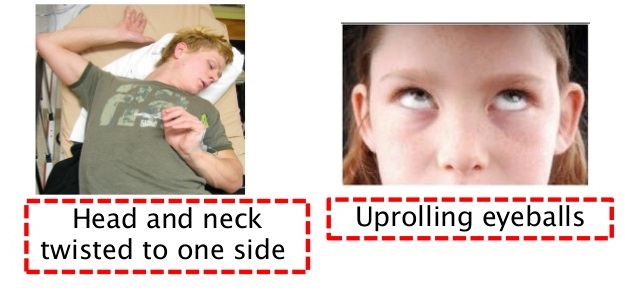
👩⚕️ Clinical Features
- 👀 Oculogyric crises (sustained upward gaze).
- 🦒 Torticollis (neck twisting), retrocollis.
- 👅 Tongue protrusion, macroglossia (without swelling).
- 😬 Trismus (jaw spasm), opisthotonus (severe arching).
- 😰 Associated: anxiety, tachycardia, sweating.
- ⚠️ Rare but dangerous: laryngospasm → airway obstruction.
🔎 Differential Diagnosis
- Tetanus, strychnine poisoning.
- Electrolyte disturbances: hypocalcaemia, hypomagnesaemia.
- Seizures, pseudoseizures, meningitis, hyperventilation tetany.
🛠️ Management
- 🩺 Supportive: ABC, oxygen, IV fluids if unstable.
- First-line medications:
- 💉 Procyclidine 5–10 mg IM/IV/PO.
- 💉 Alternative: Benztropine 1–2 mg IM/IV (slow injection).
- 💊 If persistent: Diazepam 5–10 mg IV as adjunct.
- ❌ Stop the offending drug and avoid re-exposure.
- 🧾 Discharge advice: carry a medical alert record of the reaction.
💡 OSCE Pearl:
If a young patient develops acute neck spasm or oculogyric crisis after metoclopramide → give IV procyclidine. Dramatic improvement within minutes is diagnostic.
📚 References
