
| Download the amazing global Makindo app: ✅ Means NICE/National Guidelines 2026 compliant Android | Apple | |
|---|---|
| MEDICAL DISCLAIMER: Educational use only. Not for diagnosis or management. See below for full disclaimer. |
Waardenburg's syndrome
🦻🎨 Waardenburg Syndrome is a rare congenital auditory–pigmentary disorder characterised by varying degrees of hearing loss and distinctive pigmentation abnormalities.
📌 About
- Waardenburg syndrome is an auditory-pigmentary syndrome.
- There are four clinical subtypes (Types I–IV) with overlapping features.
📊 Epidemiology
- Annual incidence: ~1 in 212,000 births.
- Prevalence: ~1 in 42,000 worldwide.
- Accounts for about 3% of congenital deafness.
🧬 Aetiology
- Sometimes associated with Hirschsprung disease.
🧪 Genetics
- Mutations in EDN3, EDNRB, MITF, PAX3, SNAI2, and SOX10.
- Usually inherited in an autosomal dominant pattern (with variable penetrance).
🖼️ Waardenburg's Syndrome
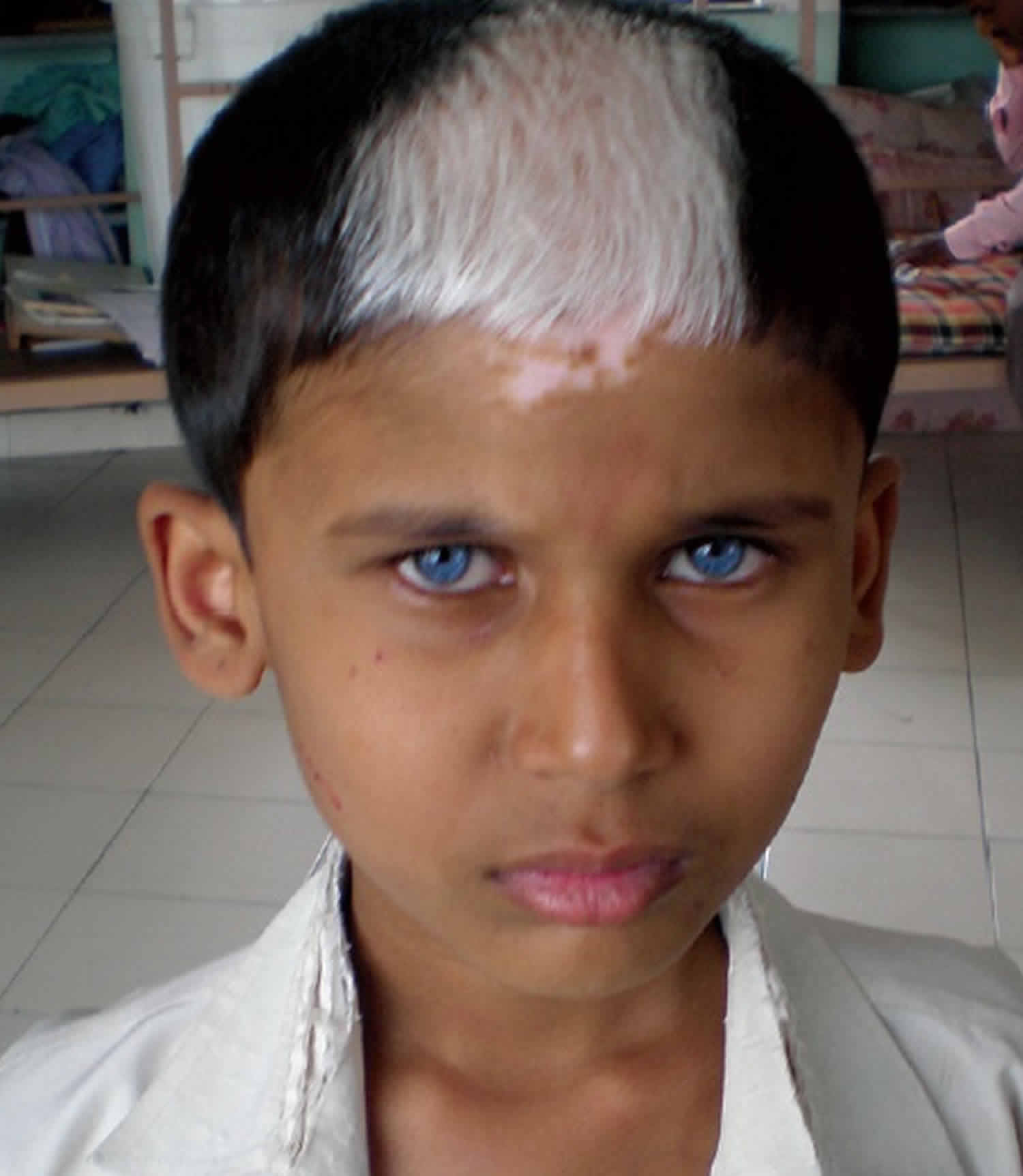
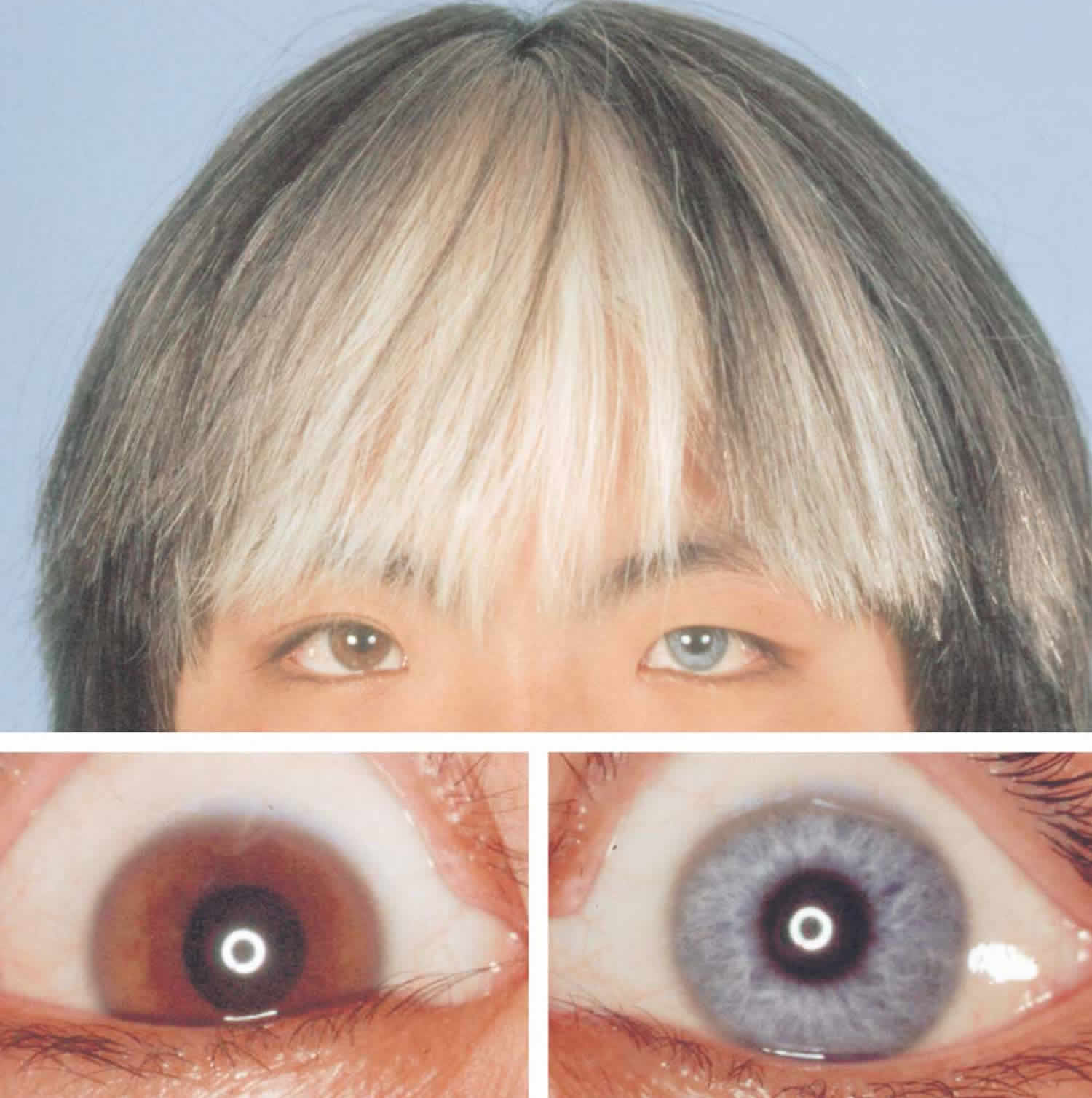
🧑⚕️ Clinical Features
- ⚪ White forelock and premature greying (before age 30).
- 👁️ Heterochromia irides or strikingly brilliant blue eyes.
- 🦻 Congenital sensorineural hearing loss (variable).
- 🦴 Some patients have musculoskeletal anomalies of the upper limbs.
- 👨👩👧 Family history: at least one affected immediate relative.
- 👁️ Dystopia canthorum (increased distance between inner eye corners).
- ⚪ Leukoderma – patches of light or white skin.
- 🪞 Medial eyebrow extension (“meeting in the middle”).
- 👃 Distinctive nasal abnormalities.
🔍 Investigations
- Pure tone audiometry (hearing assessment).
- Genetic testing to confirm mutations.
🛠️ Management
- 🔊 Hearing management → audiology referral, hearing aids or cochlear implant if indicated.
- 👨👩👧 Genetic counselling for family planning.
- ☀️ Skin protection advised for patients with leukoderma (risk of sun sensitivity).
- 💩 Treat associated Hirschsprung’s disease if present.
📚 References
| The content on this website is provided for educational and informational purposes only to support exam preparation (e.g., MLA, MRCP, USMLE) and learning. This is NOT medical advice, diagnosis, treatment, or professional guidance. It does not replace consultation with a qualified healthcare professional, official guidelines (e.g., NICE, GMC, BNF), or supervised clinical practice. Always verify information with current, authoritative sources. Makindo and its contributors accept no liability for any reliance on this content, including errors, omissions, or any resulting harm, loss, or consequences. By using this site, you agree to these terms. |
|
|
Categories
- About
- Acute Medicine
- Anaesthetics and Critical Care
- Anatomy
- Anatomy and Physiology
- Biochemistry
- Book
- Cardiology
- Collections
- CompSci
- Crib Sheets
- Critical care
- Dental
- Dermatology
- Differentials
- Drugs
- ENT
- Electrocardiogram
- Embryology
- Emergency Medicine
- Endocrinology
- Ethics
- Foundation Doctors
- GCSE
- Gastroenterology
- General Practice
- Genetics
- Geriatric Medicine
- Geriatrics
- Guidelines
- Haematology
- Hepatology
- Immunology
- Infectious Diseases
- Infographic
- Investigations
- Lists
- MRCP
- Mandatory Training
- Medical Students
- Microbiology
- Nephrology
- Neurology
- Neurosurgery
- Nutrition
- OSCE
- Obstetrics Gynaecology
- Oncology
- Ophthalmology
- Oral Medicine and Dentistry
- Orthopaedics
- Paediatrics
- Palliative
- Palliative Care
- Pathology
- Pharmacology
- Physiology
- Procedures
- Psychiatry
- Public Health
- Radiology
- Respiratory
- Resuscitation
- Revision Topics
- Rheumatology
- Statistics and Research
- Stroke
- Surgery
- Toxicology
- Trauma and Orthopaedics
- USMLE
- Urology
- Vascular Surgery